

How do you build a time machine to visit an era we are still clawing our way out of? If there is any time we do not want to be nostalgic for, it is the one recent enough to blame our current hellscape on — and director Ari Aster decides to depict the COVID-19 pandemic through the lens of Western Americana, twisting several genres to reminisce about a time that we are all still prisoners in the fallout of.
Eddington sits in perfect sequence with the rest of Aster’s work; not quite a horror film, but primed to be digested as such after his previous catalog of abject terror and paranoid delirium. If anything, Aster’s prior works feel like clinical trials for Eddington’s pointedly political catharsis, which sits right in the middle of his signature dollhouse nausea but cares about something beyond itself.
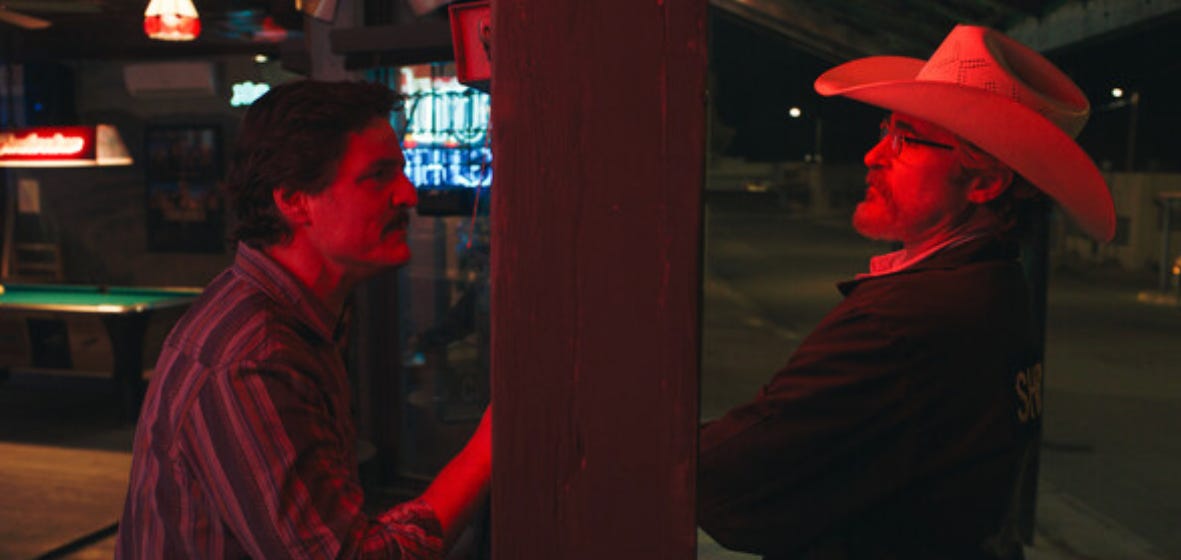
Following the death of George Floyd and in the midst of the COVID-19 lockdowns, Eddington tracks a mayoral race between a people-pleasing liberal incumbent (Pedro Pascal) and a conspiratorial conservative sheriff Joe Cross (Joaquin Phoenix), while the impending development of the small New Mexico town looms in the background. It is a microcosm of pandemic neuroses combined into a pressure cooker that, despite all of its ingredients, avoids being needlessly reactionary or arrogantly centrist.
Despite lying somewhere between the political satire of Bob Roberts and the gritty Western tendencies of No Country for Old Men, Eddington isn’t interested in pleasing fans of either genre. It is a satire you don’t want to laugh at and a Western to reminisce upon nothing, focused on the concept that the paranoid fringe and the dominant politics inch closer to becoming one and the same.
Eddington certainly is not a film for those who want the villain named in big red letters and put behind bars with a dunce cap, but it is a movie that manages to condemn conspiratorial politics by living right in the center of them and embracing their every fantasy. Initially, this ethos is blurry; in the first act, Joe is clearly uncomfortable with the QAnon adjacent rhetoric that his wife (Emma Stone) and mother-in-law spew. As time passes, all their frantic conspiracism turns out to be real and true, but its enactment is in no way an endorsement of those who wished it into this world.
Aster ultimately brings to life many conservative fantasies; real change can be made by rugged vigilante violence; “The Left” is somehow capitalist and communist; progressivism is both only used by teenagers as social currency and also embodied by a faceless cabal of guerilla militants; all the theorized abuse of people and power is actually happening.
And yet — none of these fantasies are true at all, because they are actualized by a protagonist who acts as the most pitiful mascot on the planet. Joe might be a messiah of right-wing conspiracism on paper, but he is a pathetic lunatic in a paranoid haze who only gets the power he dreamed of when his body and dignity are completely taken from him. All the abuse they have conspired about is actually true, but it’s “behind closed doors” in that it happens quietly inside every house on the block. The culture they strive to protect is a folksy facade for the dominance they seek to preserve.
But the villains of Aster’s film aren’t the conspiracists who enact their own paranoid fantasies, nor are they the people that are gunned down in the process. What the film seems to condemn, above all else, are the forces who treat any of these people as expendable. Always looming in the backdrop of Eddington’s impending hellfire is the ambiguous data tycoon threat seeking to develop the town. They can set it all in motion and succeed simply by waiting it all out. The tension of the presence grows until everyone blasts each other to bits, and the faceless threat can win while plausibly saying they’ve got no blood on their hands. All is well in the dollhouse they built.
OVERALL SCORE: 8/10
Eddington was released on July 18, 2025 and is currently showing in U.S. theaters.
. . . that strike you as both victim and perpetrator. You know, it's not until then that I became convinced we're all capable of murder . . . .